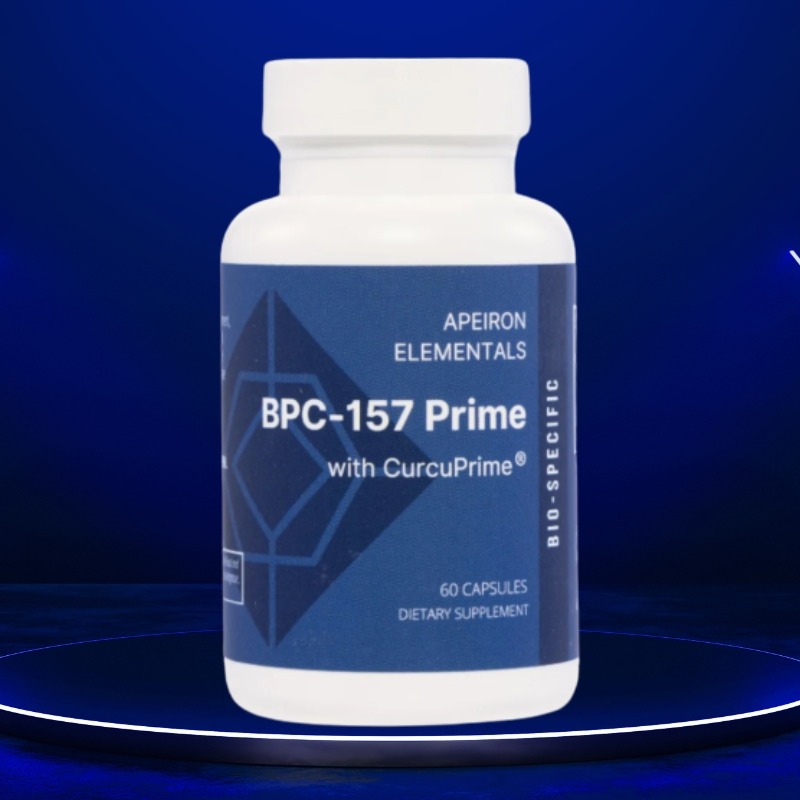
BPC-157 is not approved by FDA for any human use. This page now explains its status, the limited human evidence, the risks and the sport rules; it no longer links to a seller.
Description
BPC-157 is not approved by FDA for any human use. This page used to describe “BPC-157 Prime Capsules w/ CurcuPrime” as a recovery and gut-health supplement. On October 14, 2026, the listing its button led to sold BPC-157 capsules with no curcumin ingredient shown, labelled for research use only and “not intended for human consumption.” We no longer link to it. Here is what a lifter needs to know instead.
| What it is | A synthetic 15-amino-acid peptide, sold online as research-use-only material |
| FDA status | Not approved for any human use; FDA says it is not a component of any approved drug |
| Human evidence | One ulcerative-colitis meeting abstract and a few small uncontrolled reports; most findings are from animal or cell studies |
| Long-term safety | Unknown |
| Tested athletes | Prohibited at all times on the 2026 WADA list (S0); banned by the NCAA |
| Better next step | An injury-specific plan from a sports-medicine doctor or physical therapist |
What was this product?
The old description called it a capsule that combined BPC-157 with tetrahydrocurcumin (CurcuPrime) to repair tendons, heal the gut lining, lower inflammation and improve insulin sensitivity. None of that was shown in people. The listing reachable from this page on October 14, 2026 offered BPC-157 capsules alone, with a disclaimer that all of its compounds are for research use only and not for human consumption. A “research use only” label does not make a product safe or legal to take, and its label alone does not verify its identity, amount or purity for human use.
Is BPC-157 approved or legal to sell as a supplement?
No. FDA has not approved BPC-157 for any human use. On FDA’s list of bulk drug substances that may present significant safety risks, BPC-157 sits among the nominations that were withdrawn; it was previously in category 2. That is not approval. FDA’s July 2026 briefing document for its Pharmacy Compounding Advisory Committee said BPC-157 is not a component of any FDA-approved drug and raised concerns about impurities, aggregation and the limited safety information. A briefing document and an advisory meeting are not final agency action.
What does the research actually show?
Most of the recovery claims come from animal and cell studies. FDA describes one randomized, placebo-controlled meeting abstract in ulcerative colitis that lacked key trial details, and small uncontrolled reports, including a two-person 2025 intravenous pilot. None of these was a workout-recovery study, and none can show that BPC-157 heals tendons, ligaments or the gut in people or is safe to use routinely. For the full evidence, see our guide to BPC-157 benefits and the evidence.
What are the risks?
- Unknown long-term safety. FDA says there is not enough information to know whether BPC-157 could cause harm in people for the uses proposed.
- Unknown product. Research-use material is sold as not for human consumption, and a seller’s own test certificate is not an FDA review; what is in a capsule, and how much, is not verified for human use.
- Sport eligibility. The 2026 WADA Prohibited List names BPC-157 under S0, non-approved substances, prohibited in and out of competition. The NCAA bans it as a peptide hormone. A positive test can cost a season.
What to do instead
If a tendon, ligament, joint or gut problem is holding back your training, take it to a sports-medicine doctor or physical therapist and ask for a diagnosis and a loading plan you can follow. If you are a tested athlete, check every product on Global DRO first. For the wider picture on peptides that are foods, supplements, cosmetics or prescription medicines, read Peptides 101.
This page is for general information and is not medical advice.